
Gambling winnings in the UK, including lottery, poker, and betting winnings, won’t have to pay income tax for individual players. It’s important to understand that while operators and professional players may have a tax situation subject to gambling duties or capital gains tax, most casual punters and bettors remain tax-free. This guide explains everything you need to know about pay income tax, betting duties, and how HMRC handles gambling winnings. March, 2026
If you’re looking to put your tax‑free winnings into action, best online casino sites offer a wide range of games from slots to live dealer tables, all licensed and regulated by the UK Gambling Commission. Playing at these trusted platforms means you can enjoy the same tax advantages — whether you win on the spins or at the poker table, hmrc won’t take a cut. Just remember to stick to sites that hold a valid uk licence, so your gambling remains fair, secure, and fully compliant with uk law.
Understanding Gambling Taxes in the UK
In the UK, individual players don’t need to declare most gambling winnings. Casual bettors’ winnings aren’t subject to capital gains or income tax, while operators must comply with gambling duties and the betting and gaming act. Understanding the tax burden in the industry helps players and operators manage their tax situation.
List: Key points about UK gambling taxes
- Winnings from lottery and bingo remain tax-free
- Professional players may be subject to income tax if gambling is it’s your main source of earnings
- Operators and betting companies must pay gambling duties
- HMRC may take action if income exceeds thresholds or involves business activity
What Are Gambling Winnings?
Gambling winnings are the profits from activities linked to gambling, such as:
List: Examples of gambling winnings
- Lottery prizes
- Sports betting winnings
- Poker tournament earnings
- Remote gaming or online operations
For individual UK residents, winnings aren’t taxable, but operators must comply with gambling duties. Interest from winnings placed in a savings account or individual savings account may be subject to income if it exceeds the personal savings allowance.
How HMRC Defines Gambling Income
HMRC considers gambling income taxable only if it comes from a professional player or a business. For casual players:
Table: Taxable Status of Gambling Income
| Type of Wager / Player | Subject to Tax? | Notes |
|---|---|---|
| Individual player | Exempt | Players do not pay income tax on gambling winnings |
| Professional player | May be subject | If gambling is the main source of income, winnings may be taxed |
| Betting companies / Operators | Subject to gambling duties | Must comply with Gambling Commission regulations and betting duties |
| Lottery winnings | Exempt | Lottery winnings remain tax-free for individual players |
It’s your main consideration whether gambling is a hobby or a professional activity because that determines your tax situation.
Are Bingo Winnings Taxable?
Bingo and other casual games fall under the same rules:
List: Bingo winnings rules in the UK
- Winnings are tax-free for individual players
- Players do not pay local taxes
- Operators must follow the gambling act and betting duties
- No capital gains tax applies to casual winnings
Gambling Laws and Regulations in the UK
The Gambling Act 2005 and Betting and Gaming Act define the legal framework for all activities linked to gambling in the UK. The Gambling Commission regulates operators and ensures compliance, including online operations; both King Jackpot Casino and Jackpot Village Casino hold valid licences, giving players confidence that their tax‑free winnings are earned in a fully regulated environment.
List: Key regulations for UK gambling
- Licensing requirements for operators
- Compliance with gambling duties and betting duties
- Rules for remote gaming and online betting
- Safeguarding players and preventing illegal operations
Who Needs to Pay Tax on Gambling Winnings?
Most UK residents won’t have to pay income tax on gambling winnings. It’s important to distinguish
between casual players and professional players, as the tax situation differs. While individual bettors
remain tax-free, professional players and operators must comply with the UK government’s rules and gambling duties.
Key distinctions:
- Casual players: winnings aren’t subject to income or capital gains tax
- Professional players: may be subject if gambling is their main source of income
- Operators: subject to betting duties and must report to HMRC
- Lottery and bingo winnings: exempt for all players

Professional Gamblers and Tax Obligations
If you’re a professional player, HMRC considers your winnings as taxable income. This means you must pay income tax, and your winnings may be treated as subject to income depending on your overall tax situation.
Table: Tax Obligations for Professional Gamblers
| Player Type | Tax Status | Notes |
| Professional player | Subject to income tax | If gambling is the main source of income, winnings may be taxed |
| Casual punter | Exempt | Gambling winnings remain tax-free |
| Operators / companies | Subject to gambling duties | Must follow betting and gaming legislation |
It’s your main consideration whether your betting activity qualifies as a profession, because this determines if HMRC may take action.
Casual Players: When You Don’t Pay Tax
For individual bettors, winnings aren’t subject to capital gains or income tax. Players do not pay taxes on lottery prizes, bingo, or regular sports bets.
List: Examples of tax-free winnings for casual players
- Lottery prizes won without paying tax
- Poker winnings from occasional tournaments
- Betting winnings from casual wagers
- Small online operations or remote gaming bets
Even if you place your winnings in a savings account or individual savings account, interest from your winnings may be subject if it exceeds the personal savings allowance, but the winnings themselves remain tax-free.
Operators and Casino Responsibilities
Operators must comply with UK tax laws, including gambling duties and reporting under the Gambling Commission. This applies to both physical casinos and online operations.
List: Operator responsibilities
- Pay betting duties on total revenue
- Ensure all gaming is licensed under the Gambling Act 2005
- Report large payouts to HMRC
- Maintain compliance with the Betting and Gaming Act
Calculating Tax on Your Gambling Income
Even if most individual players winnings aren’t subject to tax, knowing how taxes work helps you understand your tax situation. Professional players and operators need to calculate taxable income and capital gains where applicable.
Table: UK Gambling Tax Rates and Allowances
| Type of Winnings | Tax Status | Notes |
| Lottery and casual bets | Exempt | Gambling winnings remain tax-free |
| Professional gambling income | Subject to income tax | Tax is paid based on the applicable income tax rate |
| Interest from winnings in savings | May be subject | Tax applies if interest exceeds the personal savings allowance |
| Capital gains from gambling assets | Subject to CGT if applicable | Gambling winnings are not automatically exempt from capital gains tax |
Gambling Tax Rates and Allowances
Rate taxpayers may be affected if their professional gambling income increases their overall tax burden. It’s important to note: casual winnings remain tax-free, and only professional players or operators face a levy under UK law.
List: Allowances and rates to consider
- Personal savings allowance for interest you earn
- CGT thresholds for gambling-related assets
- Betting duties on operators and casinos
- Industry-specific exemptions
Capital Gains Tax and Gambling Winnings
While gambling winnings aren’t subject to capital gains, investments made using winnings or assets bought with profits may be subject to capital gains tax (CGT). For example, if you invest or earn any interest on winnings placed in a savings account, HMRC may take action if thresholds are exceeded.
How to Include Winnings in Your Tax Return
Most casual players don’t need to declare winnings on their tax return, but professional players must pay income tax.
List: What professional gamblers need to include
- All winnings from gambling that are it’s your main income source
- Records of bets placed and outcomes (place their bets)
- Any interest from winnings in bank accounts
- Transactions related to poker tournaments or betting companies
Recording and Reporting Your Winnings
Even though most gambling winnings aren’t subject to income tax, it’s important to keep a record of your bets,
especially if you are a professional player or if your winnings are significant. HMRC may take action if winnings
are used to generate further taxable income or invested in a way that becomes subject to capital gains tax.
Key reasons to record your gambling activity:
- Track how much you spend on betting and gaming
- Keep evidence for HMRC’s records if professional
- Record winnings from lotteries, bingo, and poker tournaments
- Monitor any interest from your winnings in savings accounts
- Track online operations and remote gaming activity
Keeping Records of Bets and Wins
Individual players don’t need to declare casual winnings, but professional players must pay tax on gambling income. Keeping a proper log of bets, wins, and losses helps determine taxable income.
Table: Suggested Records for Professional Players
| What to Record | Why It’s Important |
| Date of bet or wager | Verifies the timeline of gambling activities |
| Amount wagered | Helps determine whether gambling is professional activity or casual play |
| Winnings received | Used to calculate taxable income if applicable |
| Type of game (lottery, poker, etc.) | Classifies the source of income for HMRC purposes |
| Operator or betting company | Tracks compliance with gambling duties and regulations |
Suggested List: Information to Track for HMRC
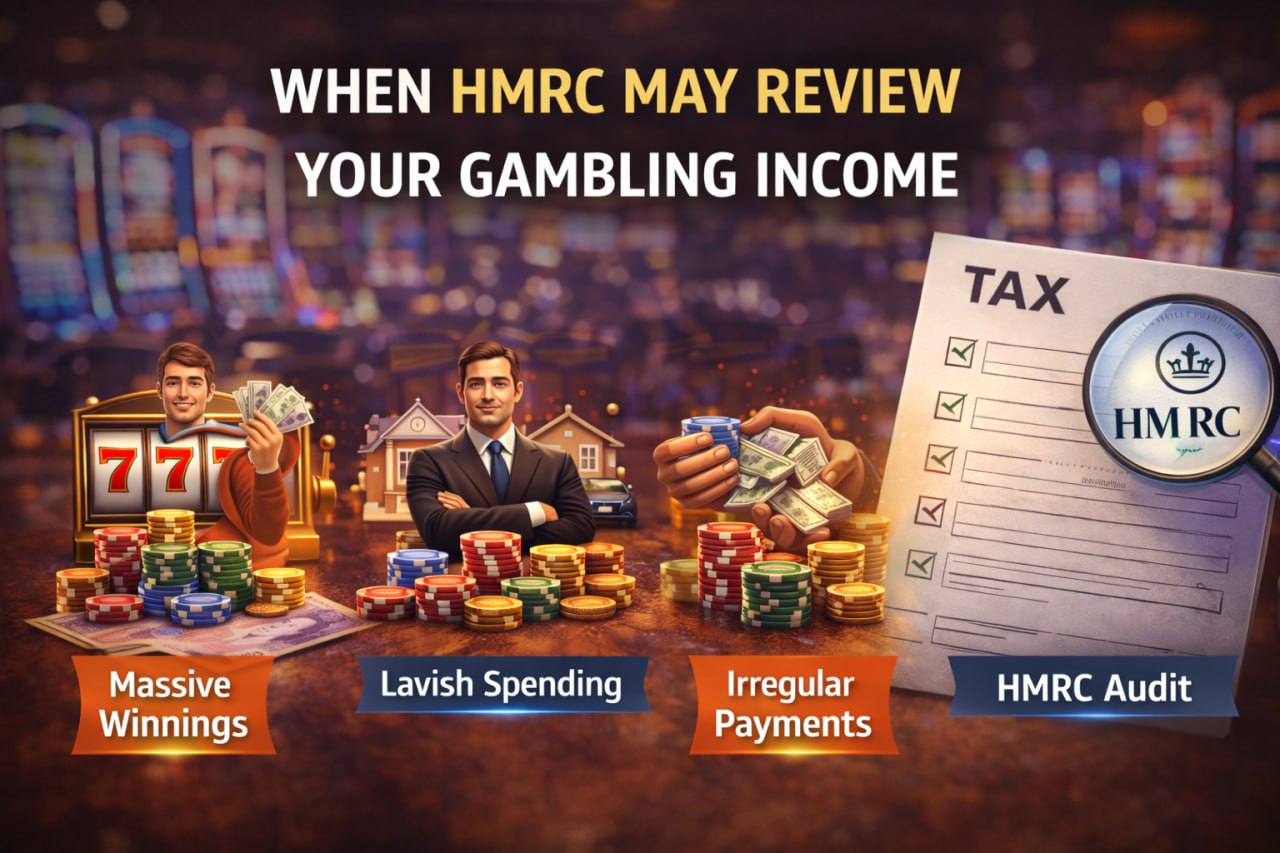
Even though most casual gambling winnings aren’t subject to income tax, it’s important for professional players to keep detailed records. HMRC may review your activity if you must pay tax on gambling income or interest you earn from winnings.
List: Information professional players should track for HMRC
- Date and amount of every wager or bet
- Betting winnings received, including lottery, bingo, and poker
- Details of operators based in the UK and online operations
- Any interest from your winnings placed in a savings account or individual savings account
- Records of losses and wins to calculate taxable income if gambling is it’s your main source of income
Keeping these records helps HMRC determine if your activity is subject to income or capital gains tax, and ensures compliance with the Gambling Commission rules.
Should You Report Offshore Gambling?
Gambling with overseas operators, also called remote gaming, usually remains tax-free for individual UK residents. Players do not pay taxes on casual offshore winnings. However, if you are a professional player or invest or earn any interest from winnings placed abroad, HMRC may take action depending on your tax situation.
List: Key considerations for offshore gambling
- Casual offshore winnings won’t have to pay tax
- Interest or investments from offshore winnings may be subject to income or capital gains tax
- Keep detailed records of bets placed, winnings, and the operators
- Professional players need to register and report if gambling is it’s your main income source
It’s important to note that even offshore activity falls under the scope of the Gambling Act 2005 and Betting and Gaming Act, and the Gambling Commission monitors compliance for operators based in the UK.
Cashing Out and Managing Your Winnings
Even though most gambling winnings aren’t subject to income tax for casual players, knowing how to manage your winnings is important, especially for professional players or those who invest or earn any interest. Proper management ensures that your tax situation remains clear and compliant with HMRC rules.
Methods of Receiving Gambling Winnings
Players and operators have several options to receive their winnings. It’s important to understand which methods may generate additional taxable income if interest you earn exceeds allowances.
List: Common methods of cashing out winnings
- Bank transfers for lottery, poker, or sports betting winnings
- Cheques or digital wallet transfers from betting companies
- Online operator accounts for remote gaming
- Lottery or bingo payouts, which remain tax-free for individual players
Interest on Gambling Earnings
If you place winnings in a savings account or an individual savings account, any interest from your winnings may be subject to income tax if it exceeds the personal savings allowance. Casual players usually won’t have to pay, but professional players should track all interest to manage their tax burden.
List: Key considerations for interest on gambling earnings
- Interest from winnings isn’t subject to income tax for casual players
- Professional players must pay if gambling is it’s your main source of income
- Offshore accounts or online interest may be subject to additional taxes
- Record interest amounts to ensure HMRC compliance
Tax Considerations for Large Withdrawals
Large withdrawals of gambling winnings can affect a professional player’s tax situation. While casual players’ winnings remain tax-free, HMRC may review rate taxpayers with high volumes of winnings to ensure compliance with income tax and capital gains tax if applicable.
List: Factors to consider for large withdrawals
- Total winnings aren’t subject to tax for casual players
- For professional players, withdrawals are considered taxable income
- Withdrawals invested in accounts may be subject to capital gains or income tax
- Keeping detailed records of bets placed and winnings is essential
Additional Resources and Help
HMRC Guidance on Gambling Income
HMRC provides clear guidance on which gambling winnings aren’t subject to tax and the responsibilities of operators based in the UK. It’s important for professional players to follow these rules to avoid penalties.
List: HMRC guidance highlights
- Casual players don’t need to declare lottery, bingo, or sports betting winnings
- Professional players must pay income tax if gambling is it’s your main source of income
- Operators must pay gambling duties and comply with the Gambling Commission
- Offshore gambling winnings may be subject depending on investments or interest earned
Recommended Tax Return Services for Gamblers
Professional players and operators can benefit from tax return services that handle capital gains, income tax, and reporting for remote gaming or large winnings.
List: Benefits of using tax services
- Ensure all winnings and interest are accurately reported
- Calculate taxable income for professional gambling activity
- Track bets placed, winnings, and operator details
- Manage compliance with Gambling Commission and gambling duties
Useful Tables and Charts for Tax Calculation
Using tables and charts can simplify understanding your tax situation. These can include taxable vs tax-free winnings, interest calculations, and capital gains scenarios for professional players.
Table: Example Tax Calculation for Professional Players
| Source of Winnings | Tax Status | Notes |
| Lottery or casual bets | Exempt | Gambling winnings remain tax-free |
| Professional gambling | Subject to income tax | Tax is calculated based on the individual’s overall tax situation |
| Interest from winnings | May be subject | Tax applies if interest exceeds the personal savings allowance |
| Investments from winnings | Subject to CGT if applicable | Gambling winnings are not automatically exempt from capital gains tax |
List: Charts to include for clarity
- Taxable vs tax-free winnings comparison
- Interest earned vs personal savings allowance
- Capital gains scenarios for investments from winnings
- Operator duties and levy contributions
Common Questions About Gambling Taxes (FAQ)
Do I need to pay tax on casino winnings?
For individual UK residents, gambling winnings are not subject to income tax. Players do not pay tax on casual casino wins, whether from poker, bingo, or sports betting. Only operators are required to comply with gambling duties and reporting obligations under the Gambling Commission.
Are professional poker players taxed differently?
Yes. If gambling is your main source of income, winnings may be subject to income tax. Professional players are taxed based on their overall tax situation, and keeping detailed records of bets placed and winnings is essential for HMRC compliance.
How does Capital Gains Tax affect gambling winnings?
Gambling winnings are not subject to Capital Gains Tax (CGT) for casual players. However, if winnings generate interest through savings accounts or Individual Savings Accounts (ISAs), that interest may be taxable if it exceeds the personal savings allowance.
What allowances can reduce my gambling tax?
- Personal savings allowance on interest earned from winnings
- CGT exemptions when winnings are reinvested by professional players
- Reliefs for operators and betting companies under gambling duties
- Professional allowances if gambling is your primary source of income
Can I deduct gambling losses from my income tax?
No. Casual players cannot deduct gambling losses from taxable income. Only professional players may deduct losses when calculating taxable income, and all records must be maintained for HMRC review.
How do tax rates apply to large jackpots?
For individual players, gambling winnings remain tax-free regardless of the amount. For professional players, HMRC assesses taxable income based on tax brackets, overall income, and whether gambling activity qualifies as a business.

 Dream Jackpot Casino
- First highlight here
- And maybe another highlight
- if you want more..
- Online Since: 2017
- License: UK Gambling Commission
- Min deposit: £20
- Min withdraw: £10
Since its establishment in 2017 by Aspire Global International Ltd, Dream Jackpot bingo, slots, table games, progressive slots, and various…read more
Get bonus- Bonus: 50 Free Spins on first deposit
- Bonus%:
- Free Spins:
- Wagering: 0x
 Lets Jackpot Casino
- First highlight here
- And maybe another highlight
- if you want more..
- Online Since: 2020
- License: Malta Gaming Authority
- Min deposit: €20
- Min withdraw: €40
One of the features of Lets Jackpot reviews, regardless of which platform you visit, is the emphasis on massive daily…read more
Get bonus- Bonus: UP TO £1000 + 100 Free Spins
- Bonus%:
- Free Spins:
- Wagering: 0x
 Jackpot Village Casino
- First highlight here
- And maybe another highlight
- if you want more..
- Online Since: 2019
- License: UKGC
- Min deposit: £20
- Min withdraw: £20
The online casino was launched in 2019 by White Hat Gaming. It has since become their most popular casino site,…read more
Get bonus- Bonus: UP TO £200 + 200 Free Spins
- Bonus%:
- Free Spins:
- Wagering: 0x